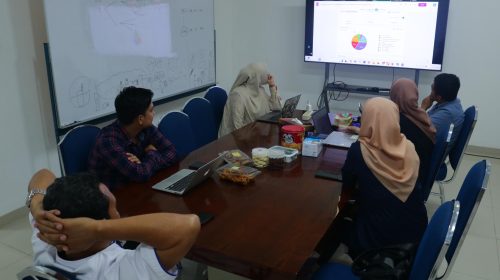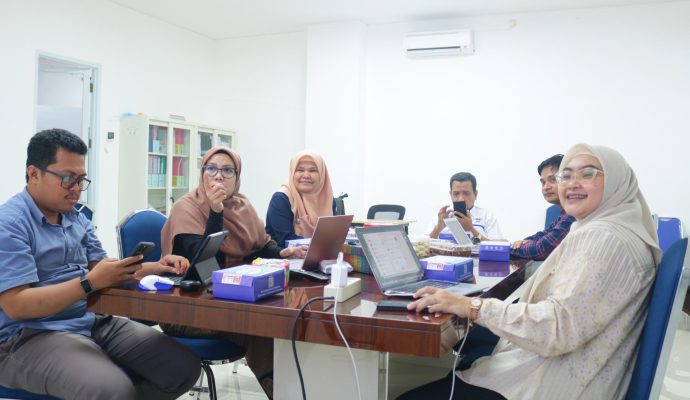
Makassar, February 13, 2025 – In order to improve the quality of education and the effectiveness of learning, the Faculty of Marine Science and Fisheries, Hasanuddin University held a Learning Evaluation activity. This activity aims to evaluate the implementation of the curriculum, teaching methods, and obstacles faced during the learning process in the previous semester as well as revising the questionnaire and finalizing the format of the learning evaluation report.
This evaluation activity was attended by the Heads and Secretaries of GPM, FIKP ISO Coordinator and the Quality Assurance Unit (UJM) team from various study programs within the Faculty of Marine Science and Fisheries, Hasanuddin University. In the discussion session, various findings related to the effectiveness of teaching methods, the use of technology in learning, and student feedback became the main focus of discussion. This evaluation is expected to produce strategic recommendations for improving academic quality in the future.
The Head of the Quality Assurance and Reputation Improvement Unit of FIKP UNHAS,
Dr. Nursinah Amir, S.Pi., M.Si., in her speech said that learning evaluation is an important part of the academic quality improvement cycle. “Through this evaluation, we can identify aspects that need to be improved and developed so that the learning process is more effective and hopefully in the future participation in learning evaluation will increase,” she said.
In addition, this activity is also a forum for each study program to share experiences and best practices in the implementation of learning. Some innovations that have been implemented by certain study programs are also presented as examples for other study programs, so that they can be an inspiration in improving teaching methods and better learning strategies.
With this learning evaluation, the Faculty of Marine Sciences and Fisheries, Hasanuddin University emphasizes its commitment to improving the quality of higher education that is adaptive and competitive. The recommendations resulting from this activity will be the basis for formulating academic policies and improving the learning system in the future.